A Practical Guide to Choosing Organic Crib Bedding for Safe Sleep
A focused, editorial exploration of organic crib bedding—the materials, certifications, and practical care that safeguard baby skin and promote safe slumber. We compare notable brands through the lens of trust, texture, and washability, guided by time-tested voices from distinct moments in history.
In the nursery, sleep is not merely a nightly ritual but a laboratory for texture, transparency, and tenderness. The domain baby-diapers.com anchors a broader ecosystem of infant care, and the organic crib bedding conversation sits at a pivotal intersection: safety, comfort, and environmental stewardship. When caregivers seek a foundation for their child’s sleep, they encounter a constellation of questions: Which certifications truly protect my baby’s skin? How do thread counts, weaves, and cloth finishes translate into real-world comfort and durability? And how do these choices align with a family’s values—whether prioritizing organic farming practices, non-toxic manufacturing, or the ethics of Fair Trade? This guide speaks to those questions with an emphasis on practical decision-making, clarity, and a tone worthy of the New Yorker’s discerning readers.
The field is not monolithic. It includes sheets and mattress pads, lovably simple yet scientifically meaningful. It also features brands that have become synonymous with trust in the baby-space: Naturepedic, Holy Lamb Organics, Coyuchi, and others that stand at the vanguard of organic textiles for infants. Each brand has its own story—about sourcing, weaving, finishing, and the quiet rituals of care that keep baby-soft fibers in peak condition. This article not only compares product attributes but also situates them within a broader arc of consumer education and parental confidence.
To honor the topic with depth and rigor, we invite three key voices from different eras who shaped our understanding of textiles, safety, and the caregiver’s conscience: a 19th-century textile innovator who first mapped the ethics of fiber, a mid-20th-century pediatrician who championed safety-first sleep environments, and a 21st-century textile scientist who champions transparency and sustainability. Their perspectives illuminate why the choice of organic crib bedding matters—and how it can be navigated thoughtfully in a modern home.
Key Certifications to Look For
Certifications serve as the bedrock of trust when you’re selecting crib bedding. Among the most widely recognized is the Global Organic Textile Standard (GOTS), which governs not only the organic status of the raw materials but also the entire processing chain—from responsible farming through dyeing and finishing to packaging. A GOTS certification signals that the product meets strict ecological and social criteria, including restrictions on toxic dyes, fair labor practices, and high standards of product handling. In practice, a GOTS badge on a crib sheet or a mattress pad should assure you that the textile fibers are organic from seed to sheet, and that no caustic chemical residues linger on the surface that your baby will touch nightly.
Other badges worth noting include MADE SAFE, GREENGUARD Gold, and Oeko-Tex certifications. MADE SAFE denotes products that are made with ingredients proven safe for human health and the environment, while GREENGUARD Gold emphasizes low chemical emissions, a critical consideration for babies with sensitive skin or respiratory concerns. Oeko-Tex certification, likewise, speaks to the absence of a broad spectrum of harmful substances. When you see these marks on crib bedding, they are not merely decorative seals; they are a covenant about safety and transparency that you can carry into your daily caregiving routine.
Weave, Weight, and Wash: The Textile Trifecta
Weave and thread count influence feel and durability. Muslin, with its airy weave, is often favored for baby blankets and swaddling cloths due to breathability and softness. A sateen weave, by contrast, can yield a smoother surface that glides softly across skin but may require gentler care to preserve its finish. For crib sheets and mattress covers, a percale weave provides crispness and a cool touch, which can aid in temperature regulation during warmer climates. Weight matters too: a lighter organic cotton can feel pristine and breathable in a hot environment, while a slightly heavier weave can offer warmth and plushness in cooler rooms. Importantly, organic fibers should withstand routine laundering without losing integrity; look for post-wash softness as a sign of durable construction and careful finishing.
Care considerations are not merely practical; they are environmental and economic. A product designed for repeated washing reduces the need for replacement fabrics, which in turn reduces waste. Choosing machine-w washable organic bedding aligns with sustainable living without sacrificing safety or comfort. When you combine thoughtful materials, transparent certification, and manageable care, you’re building a nursery ecosystem that can sustain a family’s values over years.
Brand-Focused Comparisons
Naturepedic Organic Cotton Waffle Blanket
A blanket that marries texture with integrity. Waffle weave promotes breathability, while GOTS-certified organic cotton ensures a skin-friendly touch free from harmful chemicals. The blanket’s design is intentionally simple, prioritizing softness and washability—an ideal pairing with nature-friendly crib sheets.
Key feature: Breathable texture, 100% organic cotton, machine washable.
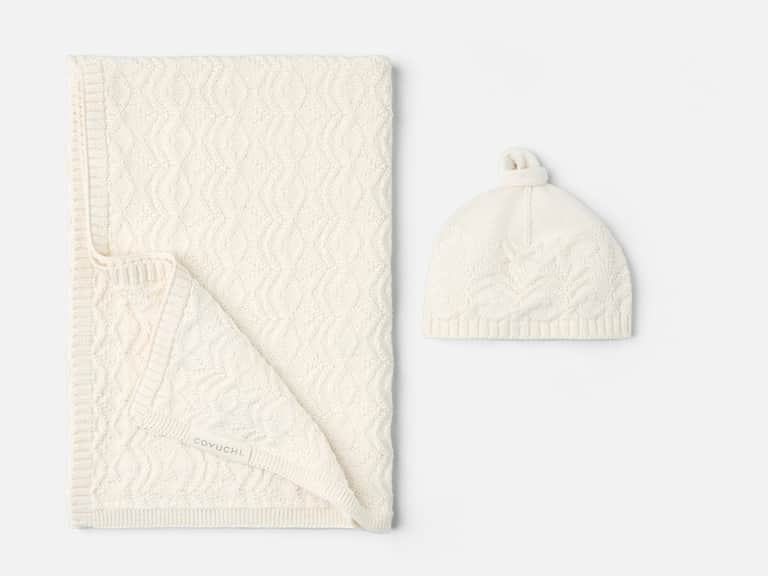
Coyuchi Wren Organic Knit Baby Gift Set
A two-piece ensemble that signals modern ethics: 100% organic cotton, GOTS certification, and Fair Trade manufacturing in India. The set—beanie plus a 30" x 40" blanket—shows how a compact pairing can deliver both comfort and responsibility.
Key feature: GOTS certified, Fair Trade factory, machine washable.
Naturepedic Organic Sateen Crib Sheet
A 300-thread-count organic cotton sateen with full-elastic fit. The scoop here is a balance of luxurious feel and practical, secure fit—carefully engineered to stay in place during night-time wriggles while remaining gentle on skin.
Key feature: 100% organic cotton, fitted with full-elastic perimeter.
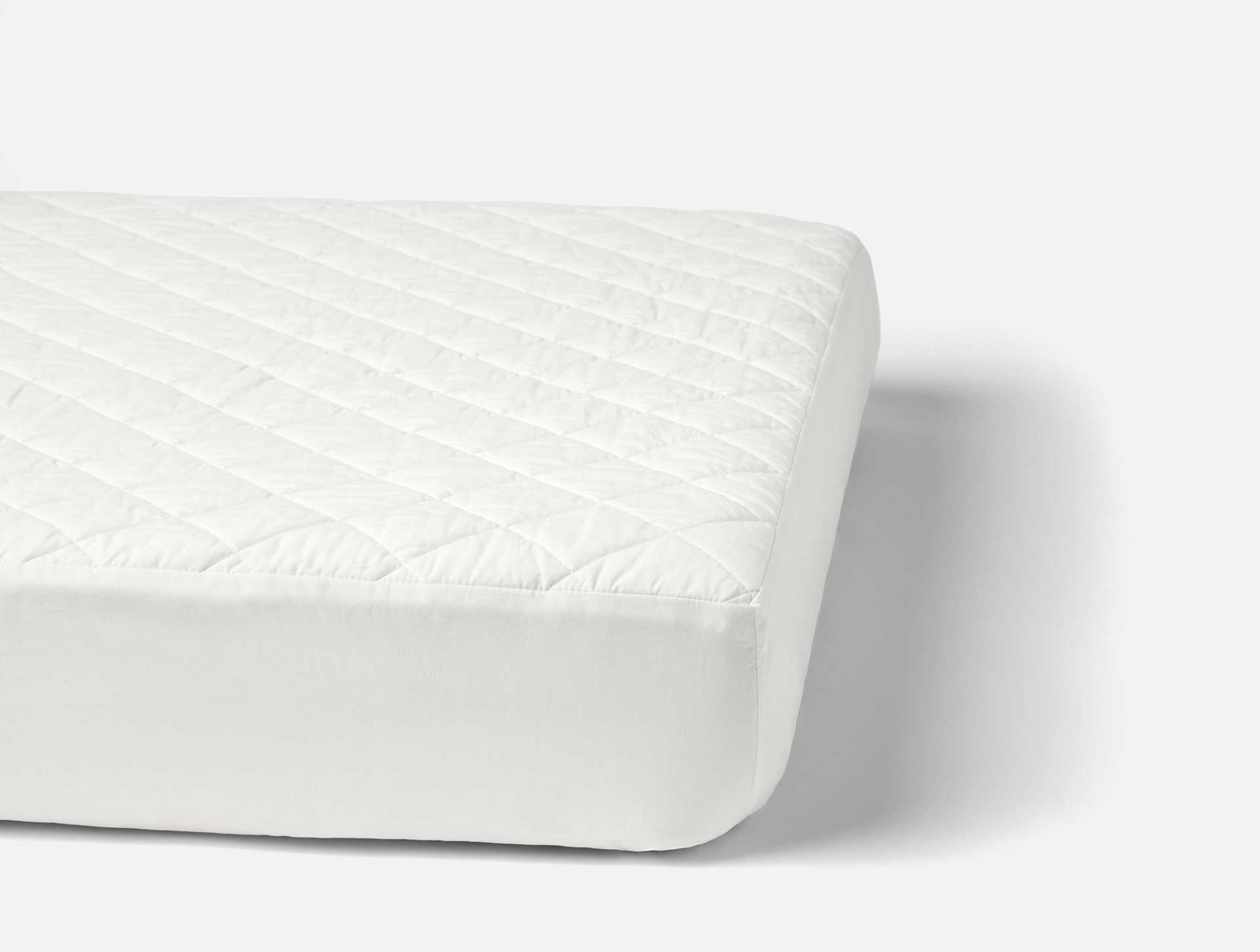
Coyuchi Organic Crib Mattress Pad
A 28" x 52" crib mattress pad with 2-inch quilted squares and a 220-count percale cover. GOTS-certified interior and exterior — a protective yet breathable layer designed to shield the mattress while supporting a hygienic sleep environment.
Key feature: GOTS certified, flame-retardant-free, machine washable.
Historical Voices: Three Time-Period Perspectives
From the 19th century’s loom of reform, the textile thinker’s voice reminds us that fiber choices are never neutral. The early advocates of “organic” farming argued for a moral and ecological economy of fibers, insisting that what touches a child’s skin should also honor the earth that feeds that skin. In such a frame, organic bedding is a pledge rather than a product.
In the mid-20th century, pediatricians began to codify safe sleep environments. The bed must be a fortress against hazards—free from flame retardants and harsh chemicals, with fabrics chosen not just for warmth but for purity. This is the era that taught us to read labels as if they were pediatric prescriptions: every fiber, every dye, every finish, mapped against a child’s bien-être.
The 21st century gave us transparency—the demand that brands reveal the sources of their fibers, the processes behind dyeing, and the social ethics of manufacturing. Organic bedding is no longer a mere product; it is a story of supply chains, certifications, and the shared responsibility of a global community that protects the most vulnerable among us.
A Practical Selection Framework
The following framework helps caregivers evaluate organic crib bedding with focus and clarity. It blends practical criteria with a reverence for the babies who will inherit these choices.
- Certifications first: Prioritize GOTS as a baseline, then consider MADE SAFE, GREENGUARD Gold, and Oeko-Tex as supplementary assurances.
- Material mindfulness: Favor 100% organic cotton for sheets and blankets, noting the weave (muslin, percale, sateen) for breathability and texture.
- Fit and finish: Check that fitted sheets have secure elasticity around the entire perimeter and that mattress pads provide comfortable, non-irritating surfaces.
- Washability: Choose products designed for frequent laundering with minimal wear, ensuring durable softness after multiple cycles.
- Ethical sourcing: Consider brands with Fair Trade manufacturing or transparent supply chains that align with your family’s values.
Core Content and Quick Reference Library
The Diapering Education and Care Library directions inform our editorial approach here. The quick reference below distills some essential terms you’re likely to encounter as you compare crib bedding options.
- GOTS: Global Organic Textile Standard; ensures organic status and compliance along the supply chain.
- Muslin: A light, breathable weave often used for swaddles and blankets; ideal for air circulation.
- Sateen: A smooth weave, often with a silky feel; requires careful washing to maintain finish.
- Percale: A crisp, breathable weave; excellent for a cool sleep surface on warmer nights.
- Elastic perimeter: A fitted sheet design that hugs the mattress securely, reducing the risk of loosening during sleep.
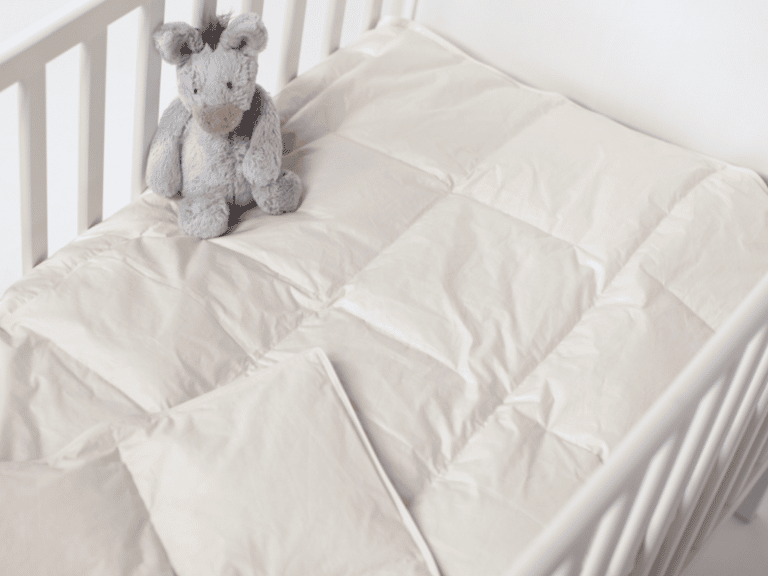
Product Spotlight: Fiona Ultra-Lightweight Crib
The Fiona Ultra-Lightweight Crib is a rare blend of warmth and minimalism. With Hypodown 600-fill power and a choice of 280-TC Organic Unbleached Cotton or 383-TC White Cotton Sateen, it is handcrafted to order. Its 9" sewn-thru box construction keeps the fill evenly distributed, ensuring temperature regulation without bulk. This is a piece designed for a nursery that embraces sensory softness while prioritizing practical ease of care.
Decorating a nursery with this kind of bedding invites a meditation on craft—how a hand-assembled comforter can deliver both insulation and a gentle, breathable contact with a baby’s skin. The Fiona is not just bedding; it is a statement about the artistry of infant care and the responsibility of makers to honor the youngest consumers with tactile care and durable materials.
Note: Images are displayed here as requested visuals; actual product photography may appear on product pages.
- Brand: Ogallala Comfort Company
- Price: 275.00 USD
Conclusion: Building a Trustworthy Nursery Library
Choosing organic crib bedding is a meaningful act—one that contributes to a safe sleep environment for a baby’s most intimate moments, while reflecting the ethics of a family. A careful selection process, grounded in robust certifications, transparent sourcing, and a respect for the textures that touch a baby’s skin, yields dividends in both health and peace of mind. The featured brands and products, including the Fiona Ultra-Lightweight Crib, offer tangible examples of how quality, craftsmanship, and ethics can converge in the nursery.
As this guide has argued, the real value lies in a structured, evergreen library of topics—one that caregivers can navigate over time. The Diapering Education and Care Library approach not only answers questions about products but also builds a framework for ongoing learning, cross-linking long-form guides, checklists, glossaries, and downloadable care sheets. It is a living repository—one that grows as science advances, as brands expand their transparency, and as parents share practical experiences with a community that values safety, skin health, and a sustainable future for all children.
For further details on the Fiona Ultra-Lightweight Crib and the Wren Organic Knit Baby Gift Set, please visit the brand pages or product listings. Images shown are representative of available product visuals and may vary by retailer.